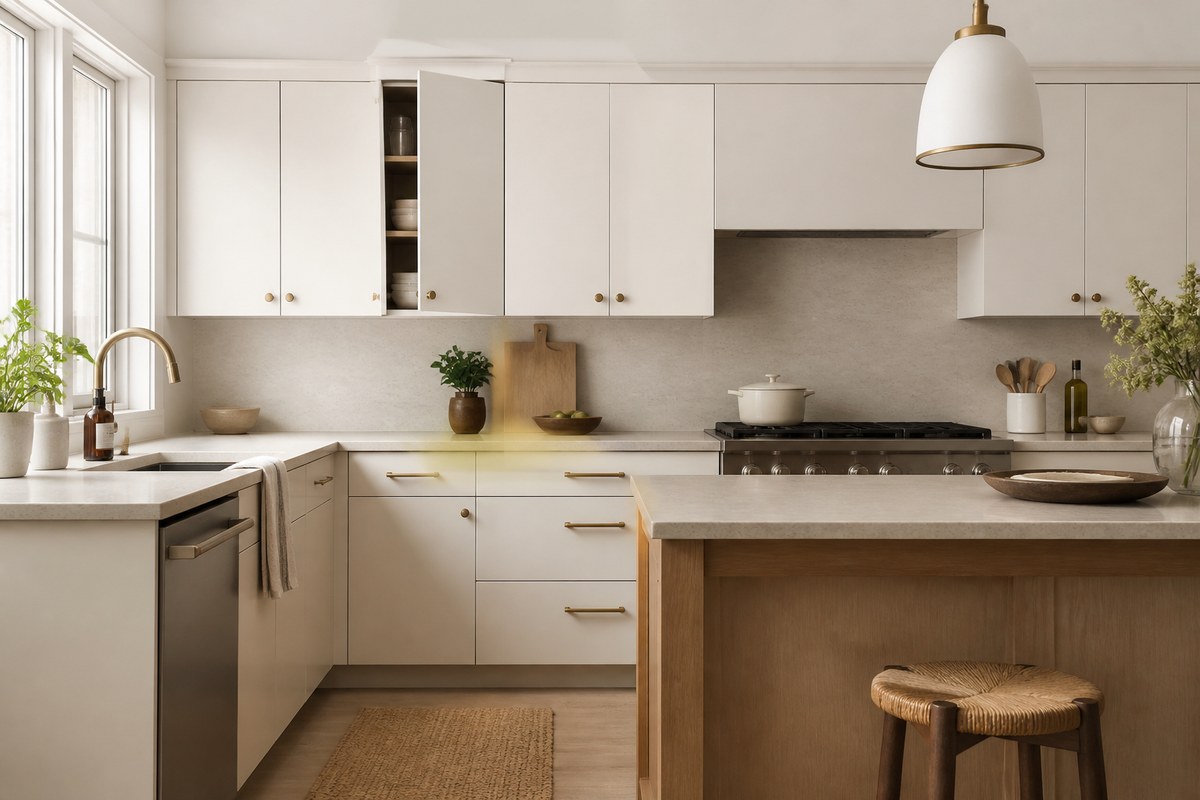
A thermofoil finish can look right on a color chip yet be a poor choice near appliance heat, trapped steam, water at a sink base, or a likely future repair. The name alone does not show whether the selected cabinet line is approved for those conditions.
Thermofoil cabinets have practical pros and cons that depend on the cabinet line and installed location. Because thermofoil is a finish decision rather than a complete cabinet specification, this guide explains where it fits, what risks should change your selection, how it compares with painted and laminate cabinets, and what to confirm before ordering.
What Are Thermofoil Cabinets?
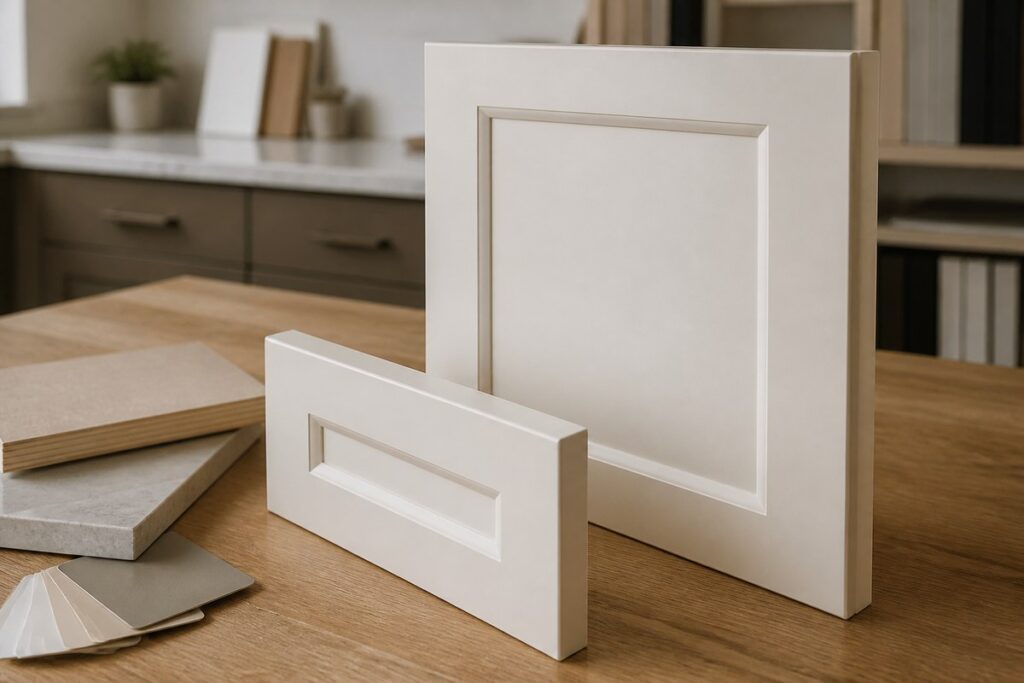
Thermofoil describes the finish used on a door or drawer front, not the whole cabinet. Thermofoil cabinet doors and drawer fronts commonly use a rigid vinyl film formed over a routed MDF core. Heat and pressure shape the film around the profile, which can create a continuous color or sheen across the face and edges. Confirm the core, back treatment, exposed edges, fillers, and end panels in the actual quote because construction varies by cabinet line.
Where Do Thermofoil Cabinets Fit Best?
Thermofoil kitchen cabinets are better suited to lower-exposure locations when the selected cabinet line is approved for the room’s heat, moisture, and cleaning conditions. Review each room and cabinet run separately rather than treating approval in one location as approval everywhere.
Dry and Low-Heat Locations
Dry storage, home-office cabinetry, living-area built-ins, and kitchen runs away from direct appliance heat, trapped steam, recurring splash, and likely leaks may present fewer exposure concerns than active kitchen or utility zones. Check the room’s cleaning, light, and daily-use requirements. A cabinet line that is suitable for one run is not automatically suitable near a range, dishwasher, sink base, or beverage station.
Humid and Wet Locations
Bathroom vanities, laundry cabinetry, and other utility-room cabinets need separate product approval. The exact cabinet line should address humidity, water, ventilation, cleaning, sink or appliance interfaces, and warranty coverage before the finish is used in those rooms.
What Risks Should Change the Selection?
Repeated heat or steam, aggressive cleaning, and a likely repair should move thermofoil lower on the list. The product’s installation guidance and the conditions of the installed location both matter.
Heat and Steam Exposure
For a range-adjacent door, dishwasher end panel, or cabinet near plumbing, request the exact product’s installation, heat-protection, cleaning, and warranty instructions. Do not infer heat protection or a moisture-resistant core from the word thermofoil alone.
Water at Edges, Cutouts, and Leaks
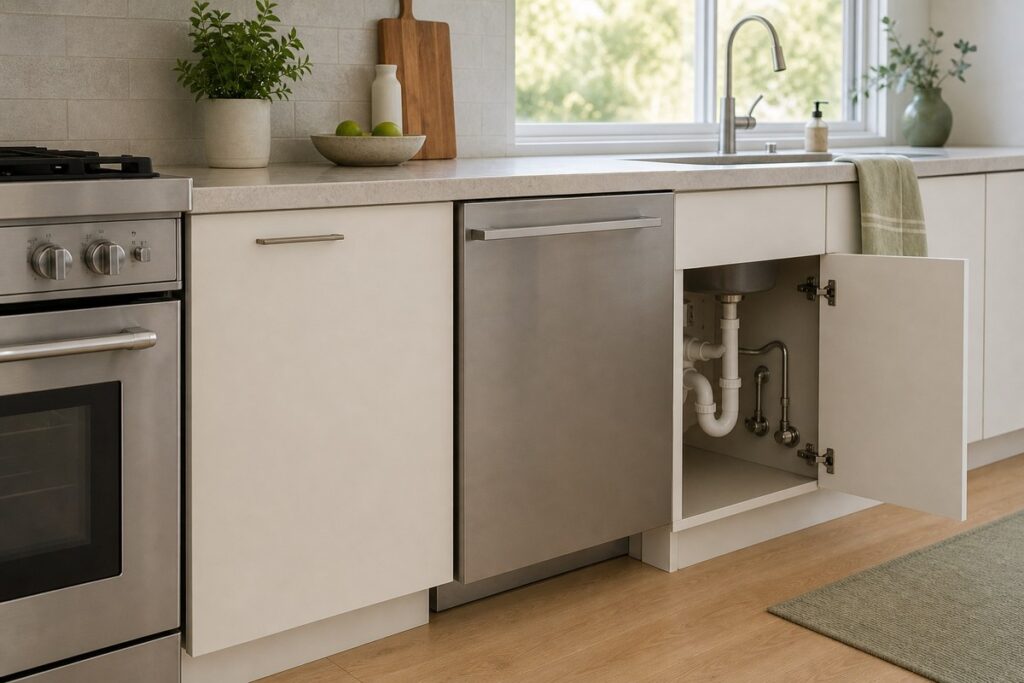
Treat water at sink bases, plumbing openings, end-panel joints, and appliance cutouts as a separate risk. Confirm how the selected product handles those interfaces, and include recurring leaks or standing water in the decision rather than treating them as ordinary cleaning issues.
Damage, Repair, and Replacement
Before choosing thermofoil, clarify the repair path for scratches, lifted film, chipped edges, and swollen cores. If thermofoil cabinets are peeling, check the product-specific repair and replacement options before assuming the door can be refinished. Ask whether a visible defect can be repaired in place, whether the door can be repainted within the warranty, and how long a color-matched replacement remains available. If replacement is the expected remedy, record the door size, thickness, overlay, and hinge or drilling pattern with the original order.
Use kitchen cabinet materials to keep the surface system separate from the cabinet box, edges, hardware, and room conditions that also affect the decision.
How Do Thermofoil, Painted, and Laminate Cabinets Differ?
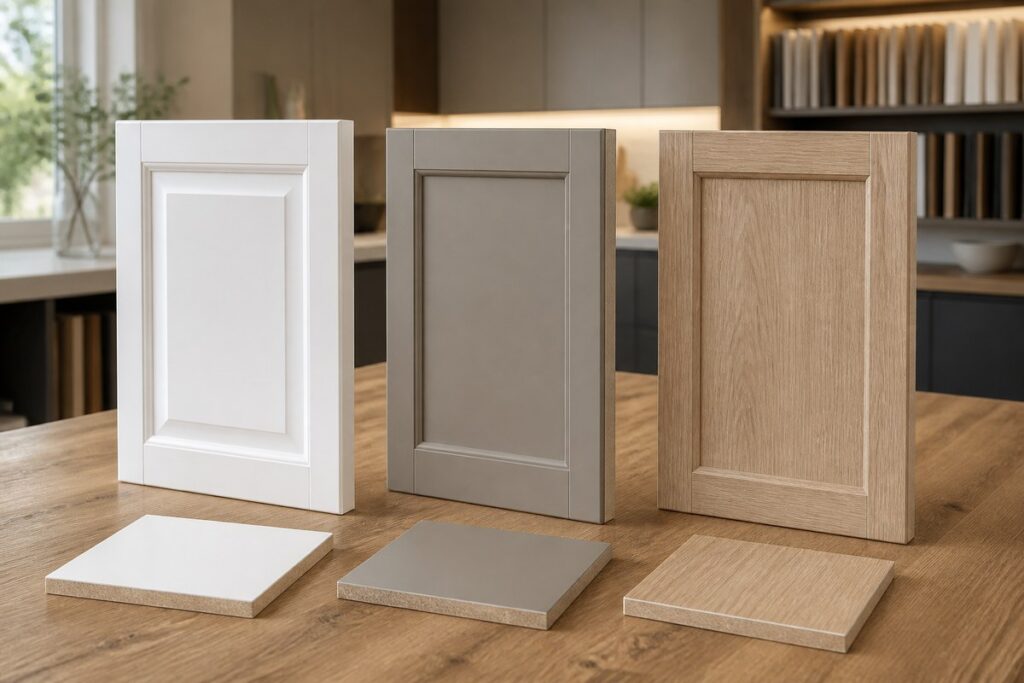
Whether the choice is thermofoil vs. painted cabinets or thermofoil vs. laminate cabinets, compare the finish systems rather than the finish names alone. Thermofoil does not determine whether a cabinet uses framed or frameless construction, which changes door overlay, hardware, and the front of the cabinet box.
Finish System, Profile, and Edge Treatment
| Decision Factor | Thermofoil | Painted | Laminate |
|---|---|---|---|
| Surface system | Formed vinyl film over a shaped core | Coating system over a specified substrate | Decorative laminate or similar sheet system over a core |
| Profile and edge treatment | Depends on the formed film, door profile, and coverage | Depends on the substrate, profile, primer, and coating | Depends on the panel, edge system, and product construction |
| What to verify | Core, face and back treatment, exposed edges, care limits | Substrate, sheen, cure, touch-up process, care limits | Face, edge treatment, seams, repair path, care limits |
Compare complete door samples under the room’s actual light before approving a finish system. Routed details, sheen, reflected light, edge coverage, and visible end treatment can change the result more than a flat color chip suggests. Use kitchen cabinet styles to settle the front treatment before approving the finish.
Future Change and Repair
Choose thermofoil when the supplier system, approved profile, finish, care requirements, and replacement path fit the project. Choose paint or laminate only when the exact product better meets the profile, edge treatment, heat exposure, repair plan, and samples under review. Compare cabinet materials by the whole assembly, not the finish name alone.
What Should You Check Before Ordering?
Before ordering, the full door, room interfaces, and supplier instructions should point to the same decision. At GEORGE INTERIOR, we use that review to coordinate the cabinet finish with the wider room plan rather than approve it from a color chip alone.
Reviewing the Full Door Sample

Review a complete door from the selected cabinet line, not just a color chip. Place it beside the countertop, backsplash, hardware, and room lighting. Confirm the color, sheen, profile, edge coverage, and visible back or end treatment before approval.
For a whole-home project, residential interior design keeps nearby finishes and room transitions in the same review.
Mapping Room Interfaces
Mark every cabinet exposure on the drawings before approving the finish. Identify range-adjacent doors, dishwasher end panels, sink bases, trash pull-outs, appliance panels, and any place that may trap heat, steam, grease, or water. Thermofoil describes a surface system, while cabinet construction still affects door overlay, hardware, clear openings, and the way units meet.
Confirming Care, Warranty, and Replacement Terms
Request the selected product’s care and replacement terms in writing before ordering. Confirm the cleaning restrictions, warranty exclusions, replacement-part policy, and exact product data that apply to the selected finish. Keep those records with the final drawings and sample approval so a later repair does not depend on a verbal promise. Use interior design services when the cabinet material must be coordinated with adjoining finishes and a wider room plan.
Frequently Asked Questions
How Should You Clean Thermofoil Cabinets?
Follow the selected cabinet line’s written care instructions. If a cleaner, pad, or degreaser is not approved there, do not assume it is safe for the surface. Ask the supplier for a written recommendation before using it on a new or damaged door.
How Long Do Thermofoil Cabinets Last?
Do not use a generic lifespan as the deciding number. Compare the exact cabinet line’s warranty, care requirements, installed location, and replacement-part policy because those conditions affect whether a later issue has a practical remedy.
How Much Do Thermofoil Cabinets Cost?
Do not treat thermofoil as a single price point because it names a surface system, not the complete cabinet package. Compare itemized quotes that identify the cabinet box, door and drawer configuration, hardware, panels, fillers, installation scope, and the finish itself.