Modern and contemporary interior design get swapped all the time, and it’s easy to see why. Modern is a fixed point in design history: function first, clear forms, little ornament. Contemporary is whatever designers are doing now, which today borrows heavily from modernism and adds softer shapes and newer finishes.
For a whole-home project, the label matters less than the decisions behind it: flat or detailed cabinet fronts, pale wood or walnut, a low rectilinear sofa or a rounded one, quiet lighting or one sculptural fixture. Make those calls first, and the name follows.
What Is the Difference Between Modern and Contemporary Interior Design?
Time Frame
Modern design traces back to modernism, a loose set of ideas about usefulness, new materials, and simpler forms that took hold between the World Wars and ran through mid-century furniture. Contemporary has no fixed period, so its look keeps moving.
Lines and Furniture Forms
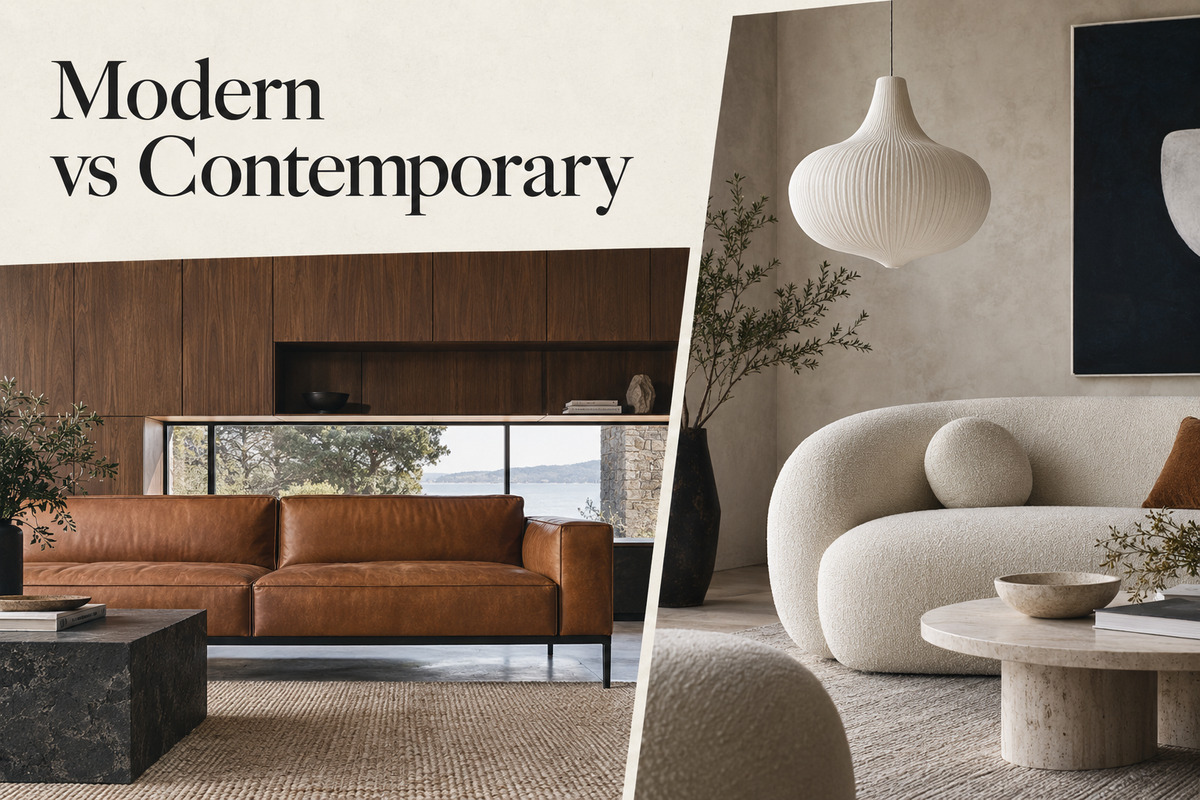
Modern rooms show their structure: straight lines, visible legs, exposed frames. Contemporary rooms keep the clean lines but usually let one or two pieces curve or turn sculptural.
Materials and Color
Modern sticks to wood, leather, glass, and metal in a restrained palette. Contemporary adds finishes like textured plaster, bouclé, and matte lacquer, and leans toward either tonal layering or sharp contrast.
Decoration
Modern rooms let proportion and useful objects do the decorating. Contemporary rooms give one artwork or statement piece a deliberate spot.
How to Recognize the Direction in Your Reference Images
Most saved photos mix both, so read the whole room rather than one piece; even a curved chair can be modernist, as Alvar Aalto’s bent-plywood Paimio armchair from 1930 proves. The fastest test is where your eye lands first. Structure and proportion point modern; a sculptural piece, sharp contrast, or statement artwork points contemporary.
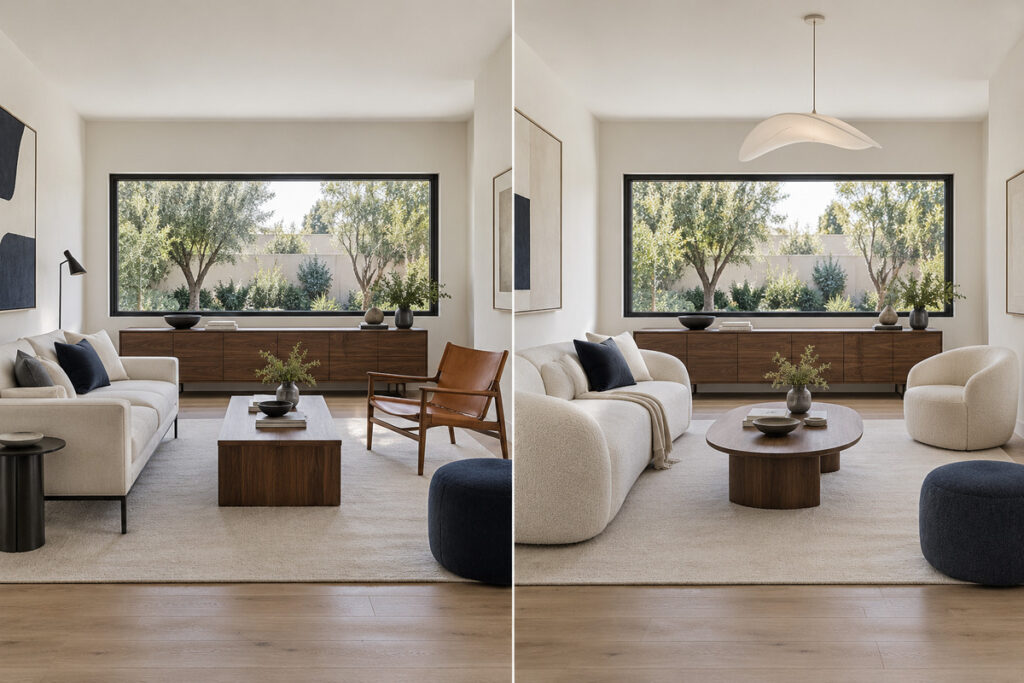
AI-generated concepts: modern on the left, contemporary on the right. The warm palette barely changes; the furniture and lighting do. These are illustrative schemes, not completed GEORGE Design Studio projects.
Then crop and label what you actually like, because “this living room” could mean the pale wood, the low sofa, or the open floor. Flag dislikes too, like glossy cabinets or bulky chairs, so a photo saved for its flooring isn’t read as a vote for everything in it.
Which Style Fits Your Home?
Your house gets a vote. Test both directions against its architecture, the finishes you’re keeping, and how each room actually gets used, and if a scheme only works after unplanned changes like new flooring or a moved doorway, change the scheme.
Architecture, Retained Features, and Natural Light
Strong existing lines (wide openings, minimal trim, a long band of windows) suit a modern residential interior that lets the geometry lead, right down to a sideboard sized to the window line. Quieter architecture leaves more room for contemporary residential design and its wider mix of shapes, though a rounded sofa that relaxes a big open room can crowd a narrow one.
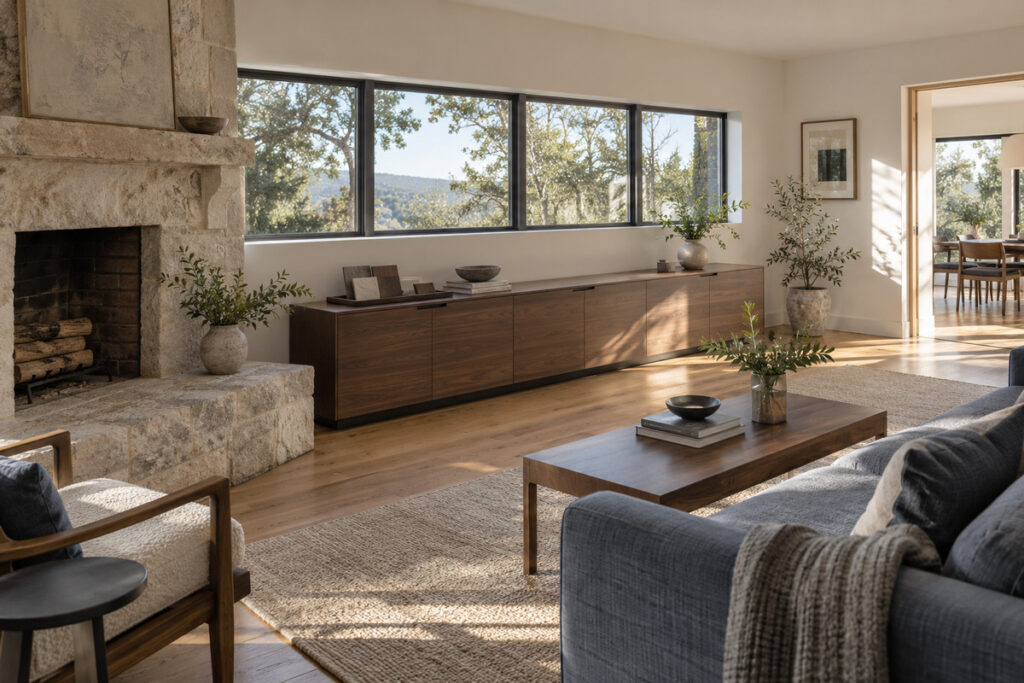
Judge every proposal against photos of the floors, doors, fireplace, and built-ins you’re keeping, and look at samples beside them by day and after dark. Walnut that glows near a sunny window can go flat under lamplight, and a neutral gray can turn cold in a north-facing room.
Daily Life and Existing Furniture
Bare modern counters stay bare only if the mail, chargers, and backpacks have a home. A deep contemporary sofa only works if its footprint, the path around it, and your family’s habits allow it.
Furniture you love belongs in the plan from day one. A modern wood dining table can anchor either direction, so measure it and note its finish before choosing the cabinets and lighting around it. If most of what you’re keeping is traditional, transitional interior design may suit the house better than either label.
Carrying One Direction Through the Whole Home
Whole-home projects succeed or fail where rooms meet, so settle the shared finishes before the furniture, starting with spaces you can see at the same time.
A Shared Material and Color Palette
Pick the main wood tone, wall color, and level of contrast as a set. If the walnut is what you love in a living-room photo, carry it into the kitchen cabinets or a bedroom dresser, but not onto every surface; a painted wardrobe still belongs.
For an open-concept kitchen and living room, put cabinet, flooring, upholstery, and lighting finishes on one board, where a cabinet front busier than everything else jumps out immediately.
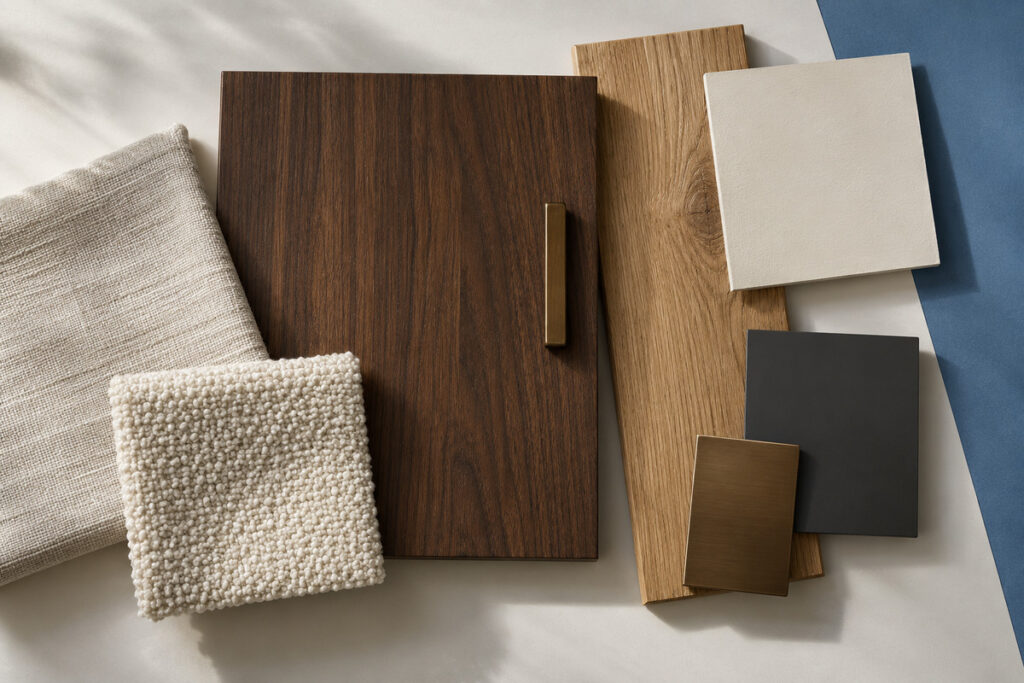
Cabinetry, Furniture, and Lighting
Flat cabinet fronts work both ways, which shows how much the surroundings decide the style. Modern pairs them with an even drawer rhythm and restrained hardware; contemporary keeps the fronts but softens the island or hangs a more expressive pendant.
Review cabinet styles as full elevations, since one door sample can’t show how a whole run reads. Then pick each room’s lead: the forms themselves in a modern scheme, or one sculptural or high-contrast piece in a contemporary one, with everything around it kept quiet.
Room-by-Room Variation
Here’s one warm palette, walnut with flat fronts, played both ways. Bedrooms can stay quieter than the living room as long as a wood tone, proportion, or detail repeats where the rooms connect.
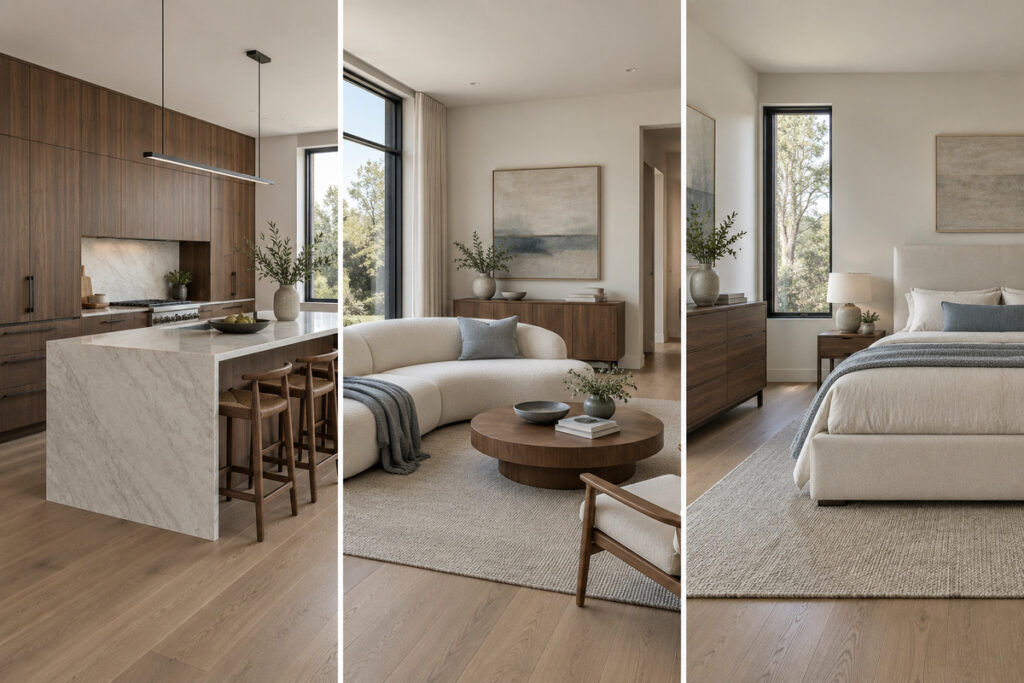
| Room | Modern Interpretation | Contemporary Interpretation |
| Kitchen | Walnut flat fronts, simple pulls, and a clearly defined island | Walnut flat fronts with a softened island end and one accent light |
| Living Room | A low sofa on visible legs, a rectilinear coffee table, and a wood lounge chair | A rounded sofa as the lead piece, with a simple coffee table and quieter storage |
| Bedroom | Simple bed geometry, a wood dresser, and compact bedside lamps | An upholstered headboard and softer bedside pieces in the same palette |
Once you and your designer agree, write the direction as one line every later choice gets checked against: “Keep the wood floor; flat walnut fronts and simple furniture; one rounded sofa; no glossy cabinets.” We plan layout, cabinetry, materials, furniture, and lighting together as one whole-home interior design. If you’d like a second opinion, send us your floor plan along with your references and that one line.
FAQ
Does Contemporary Design Mean Following Every Trend?
No. Contemporary only means current, and you still choose what to live with; put your appetite for change into artwork, rugs, and easy-to-swap furnishings rather than fixed finishes.
Is Modern or Contemporary Interior Design Less Expensive?
Neither is cheaper by definition. Cost follows scope, specifications, and how much is custom, and even a plain flat-front cabinet demands precise work because there’s no trim to hide uneven gaps. Compare proposals only when they cover the same rooms and specs.
What If Two Homeowners Prefer Different Styles?
Agree first on what you’re keeping and how the shared rooms should feel. Then compare both schemes on the same layout and have each person point to specific forms or finishes, which is far easier to negotiate than “modern” versus “contemporary.” A home office can lean toward one person’s taste.