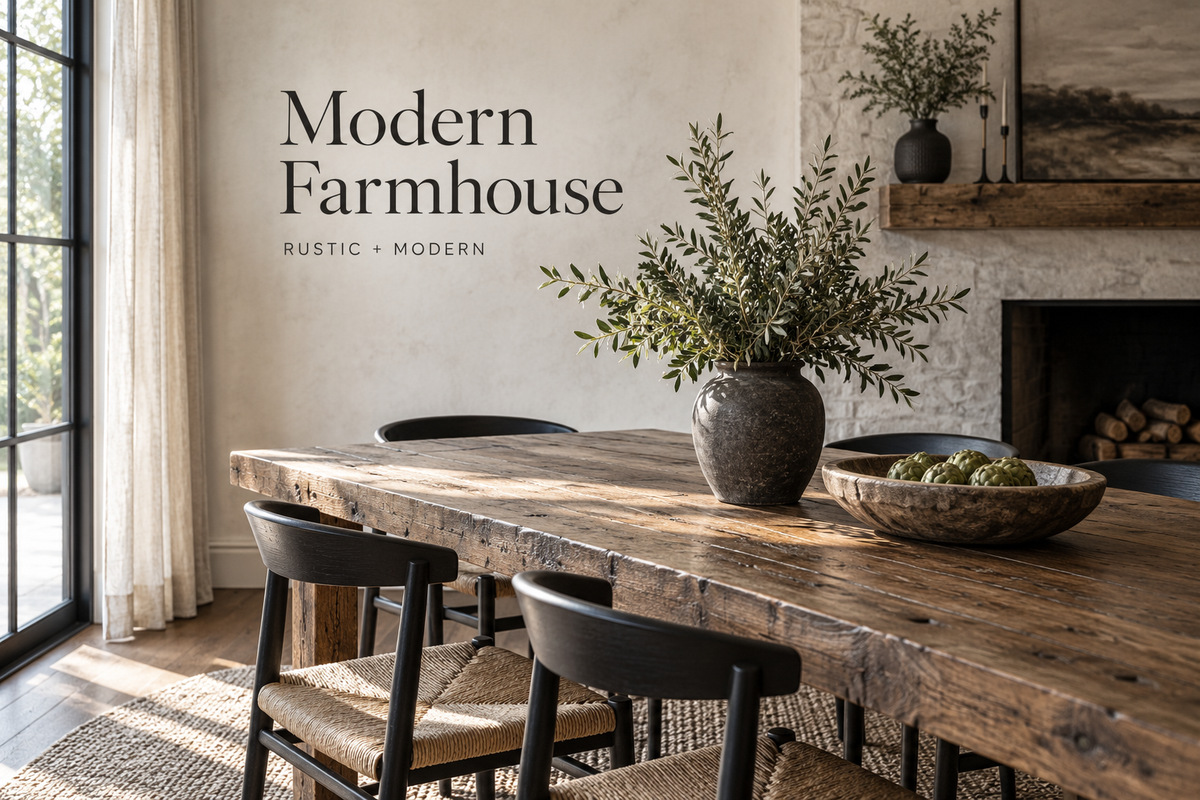
Modern farmhouse interior design is a balancing act. Lean too rustic and the house turns into a theme room; lean too modern and you lose the warmth that made you want the style. The fix is pairing rustic texture (visible grain, weathered surfaces, familiar shapes) with modern restraint (clean outlines, less detail, fewer things on display), sometimes in a single piece, like a heavily grained tabletop on a plain frame.
Shiplap, barn doors, exposed beams, and black hardware are all optional. Use one where it earns its keep, such as a barn door where a swinging door won’t clear, and skip it when it’s only there to announce the style.
Read the House Before You Buy Anything
Your floors, doors, beams, and fireplace are already making design decisions, so treat whatever’s staying as the first layer of the palette. Snap photos from the front door and from your favorite seat; close-ups show texture, but the wide shot shows how much of the room each texture claims.
| What the room already has | What to try beside it | What changes |
| Heavy wood grain across the floor | Painted cabinet fronts and a simpler table | Less competing grain, so the floor keeps its character |
| Wood beams and detailed doors | Plain furniture shapes and simple light fixtures | A calmer furnishing layer around busy architecture |
| Plain walls and flat cabinet fronts | A textured wood table, woven fabric, or a stone feature | Warmth without adding detail to every surface |
| A large stone fireplace | Quieter upholstery and wall finishes nearby | The fireplace leads, with less pattern competing for attention |
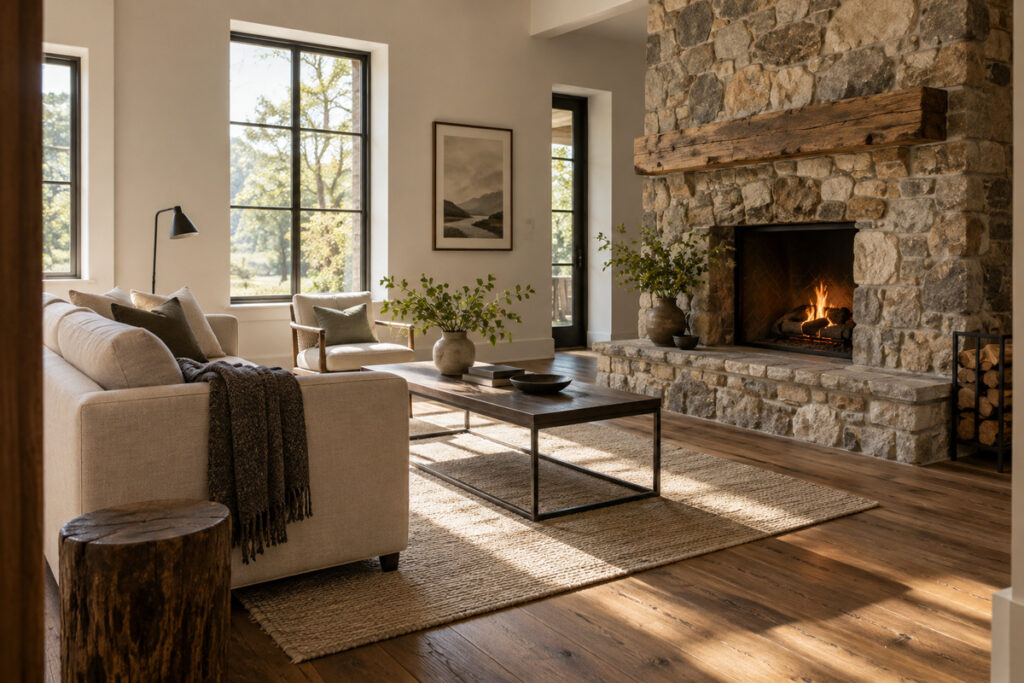
In a new build, run the same check on the planned finishes, because a beam that looks right in a reference photo can feel heavy under an 8-foot ceiling. A floor that runs through several rooms has to suit the cabinets and furniture in each, so plan connected rooms as part of one whole-home design.
Modern Farmhouse, Room by Room
The same rule holds everywhere in the house: pair a rustic material with a simple shape, or a simple material with a rustic shape. What changes from room to room is where things tend to go wrong.
The Kitchen
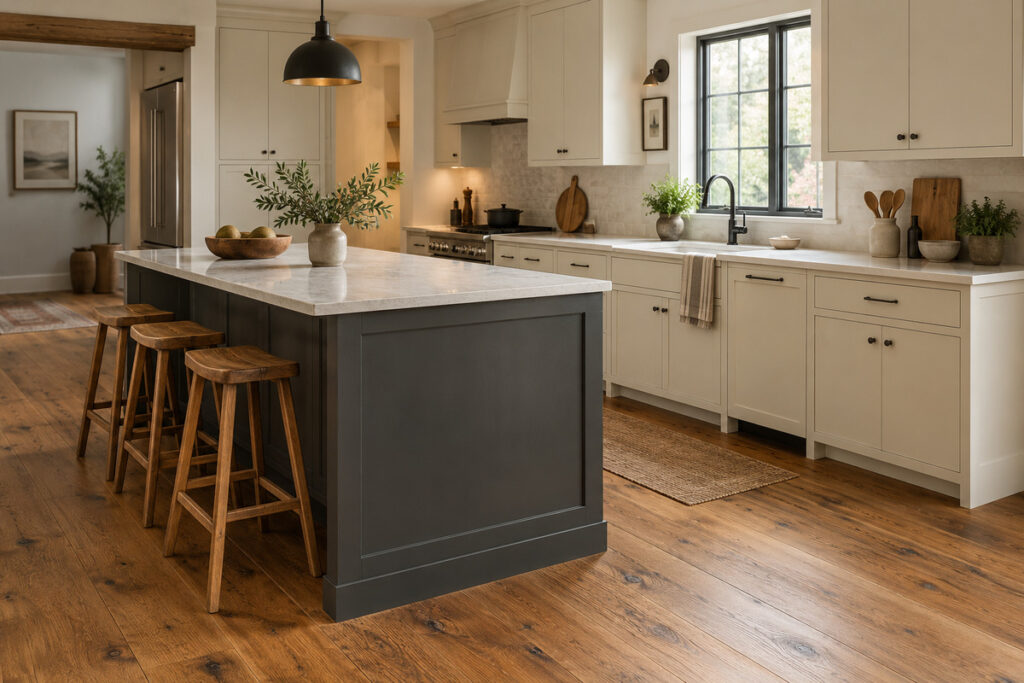
Look at cabinet door profiles in your chosen finish next to the actual floor: a framed door adds shadow and detail, while a flat front lets the wood and stone carry the room. Wood cabinets beside a busy wood floor need judging across a whole cabinet wall, since two little samples hide how much pattern you’re adding.
Countertops follow the same logic, so bold veining wants simpler doors and a quieter backsplash, while calm stone leaves room for a more detailed door. If the island is the star, with a strong paint color or heavy stone, keep the pendant above it simple and size it from the real product dimensions, not a photo.
The Living Room
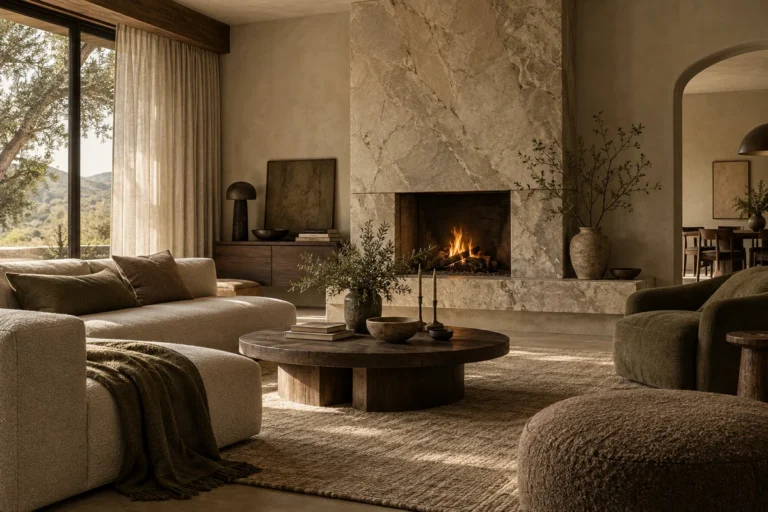
A chunky wood coffee table looks right next to a plain-armed sofa, and if the seating already leans rustic, keep the lamps simple. Let one feature run the room, usually the fireplace or a timber ceiling, and have the coffee table, rug, and nearby lights step back from it.
Textiles are the easiest dial to turn: a plain weave or low-contrast rug calms rough wood and stone, and a nubby fabric warms up smooth cabinets and plain walls. If the kitchen and living room share an open floor plan, take your usual seat and make sure the island pendants don’t hang right in front of the fireplace.
Bathrooms and Bedrooms
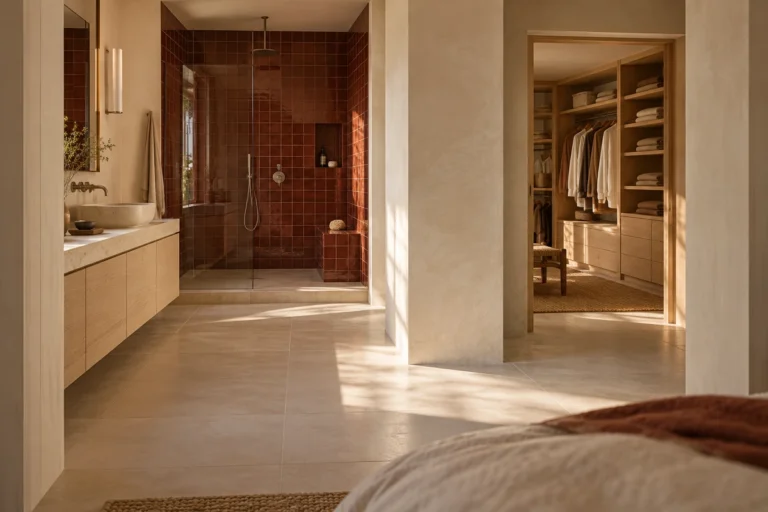
Private rooms can go softer and darker than the main living space, with deeper paint, softer textiles, and simpler hardware. In a bathroom, one rustic element is usually plenty, like a wood vanity against simple tile, and nothing has to match room to room except the finishes you see together or across a doorway.
Colors, Wood Tones, and Metals That Don’t Look Matchy
Anchor every color to the biggest finish that’s staying, usually the floor, and test paint, cabinet colors, and stone against it before approving any of them. White needs as much testing as a bold color, because daylight and lamplight bring out its undertone differently; check samples at noon and again after dinner.
Wood tones don’t have to match, and near-matches are riskier than contrasts: a pale floor with a dark table looks intentional, while two almost-identical browns look like a mistake. Metals work like paint, so start with the most visible finish and check handles, faucets, and lighting against it. Black draws a crisp line on pale doors, brushed nickel and muted brass sit quieter, and if you mix metals, give each one a job.
Test the Whole Scheme Before You Order
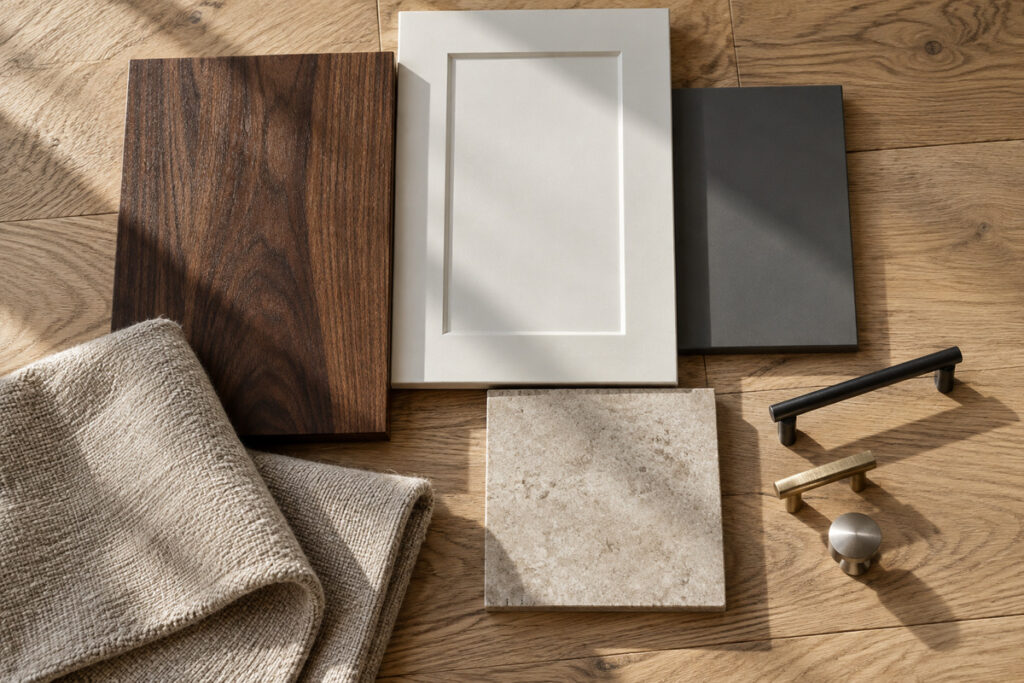
Before anything gets ordered, lay it all out: paint, cabinet, fabric, and metal samples beside the floor, stone judged from a full slab rather than a chip, and furniture footprints checked against chair movement and door swings. Ask for each product’s documented uses and care needs before it goes into a wet area, near heat, or onto a surface that takes a beating.
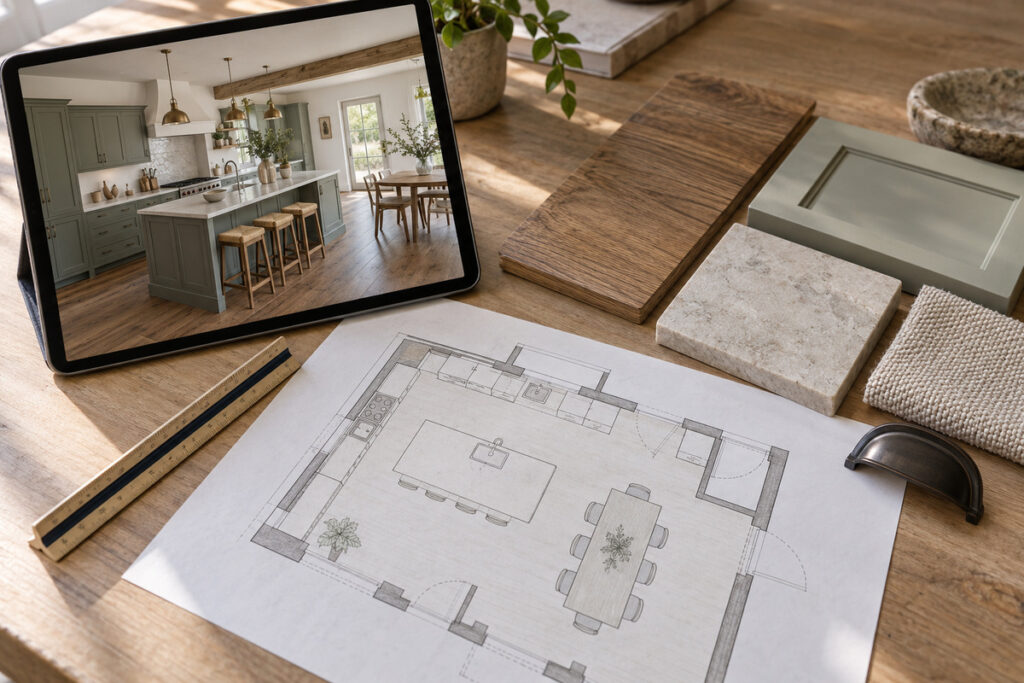
If something still feels off, find the cause before swapping products. A color clash calls for another sample; an oversized pendant calls for a size or placement change. A 3D interior design view of your own plans shows those proportions, including how the kitchen reads from the dining table. When you’re ready, share your floor plans and photos and we’ll talk through scope; pricing comes once products are confirmed.
FAQs
Can modern farmhouse interior design work in a small home?
Yes. Let a retained wood floor or one good antique cabinet supply the character instead of space-hungry extras, and before adding a big farmhouse table or deep seating, make sure storage stays reachable and people can still get around.
Can I keep antique furniture in a modern farmhouse interior?
Yes, if its size and function suit the room. With an antique dining table, check seat height, arm clearance, and legroom before falling for chairs on looks alone, then match their finish and detail so old and new read as one group.