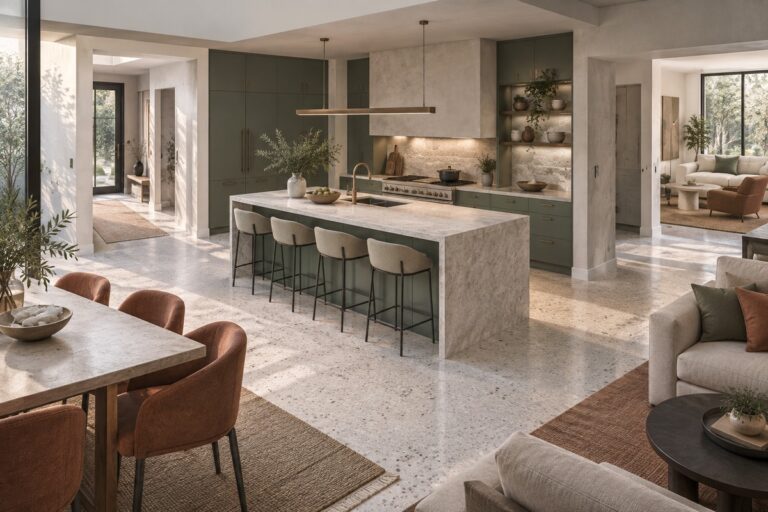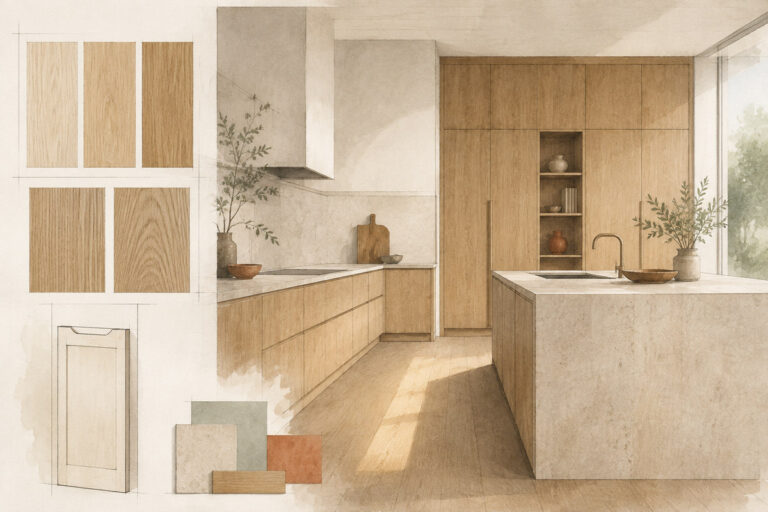
Choose a countertop after its appearance, care needs, edge treatment, and relationship to the cabinetry have been reviewed together. A material may look right in a small sample but feel too busy, too heavy, or too demanding across a full kitchen.
This guide compares the main kitchen countertop types. It then covers edge profiles, cabinet pairing, and the details to settle before fabrication. The selected product’s care instructions and the fabricator’s requirements control the final decision.
How Do Countertop Types Differ in Appearance and Maintenance?
Start with visual movement, joint treatment, repair options, and care requirements. The material category is only a starting point. The actual slab, colorway, finish, and manufacturer instructions are what need approval.
| Countertop type | Appearance | Maintenance and repair considerations | Design use |
|---|---|---|---|
| Natural stone | Each slab can show mineral variation, veining, or grain. | Care and sealing needs vary by stone and finish. A fabricator or stone supplier should provide guidance for the selected slab. | Useful when natural variation is part of the composition. |
| Engineered quartz | A manufactured surface with designs ranging from quiet to strongly veined. | Follow the manufacturer’s cleaning and care instructions. A damaged area may not blend invisibly after repair. | Helps create a controlled, repeatable look across a large run. |
| Porcelain or sintered stone | Often available in stone, concrete, or solid-color looks. | Installation and care requirements depend on the specific product, thickness, and finish. | Suits crisp, thin-looking details when the fabrication plan supports them. |
| Solid surface | A consistent, low-joint look with a broad range of colors and patterns. | Some surface damage can be repaired, subject to the manufacturer’s instructions and installer assessment. | Useful where a visually continuous plane matters. |
| Wood | Adds visible grain, warmth, and tonal change over time. | Requires a care routine suited to the finish and intended kitchen use. | Works well as a focused accent, such as an island or a dedicated work area. |
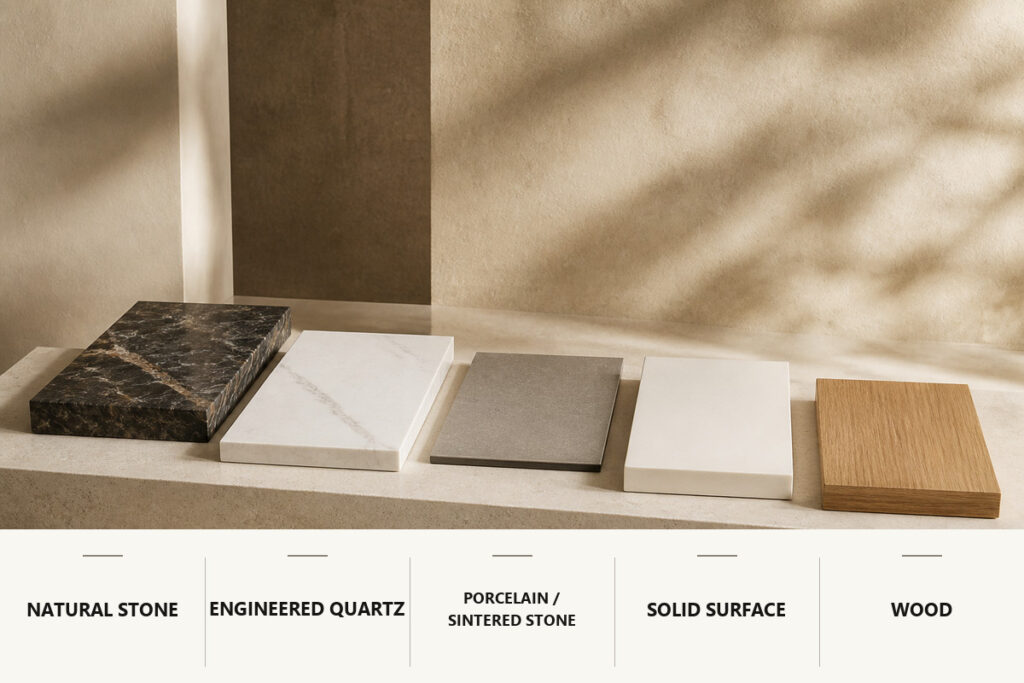
Review appearance at full scale whenever possible. Natural stone can vary substantially from a small sample, and a veined engineered surface can shift in direction and density across a long counter. Confirm maintenance from current product documentation and weigh it with the kitchen cabinet material specifications decision, since the counter and cabinetry read as one composition.
How Do Countertop Edges Affect Design and Daily Use?
An edge profile changes the perceived thickness of the countertop and the way it meets cabinet fronts. Select it after the material, cabinet style, and slab layout are visible together.
Simple Edge Profiles
A square eased edge, pencil edge, or modest round-over keeps attention on the surface and suits flat or lightly detailed doors. Specify the exact radius or ease because it affects how a glossy material catches light and how thin or soft the slab appears.
Built-Up and Mitered Looks
A built-up or mitered edge creates a deeper visible face without changing the working-surface thickness. It can give an island more presence. Before cutting, review corner returns and the direction of veining because a miter line becomes part of the finished view.
Material and Fabrication Limits
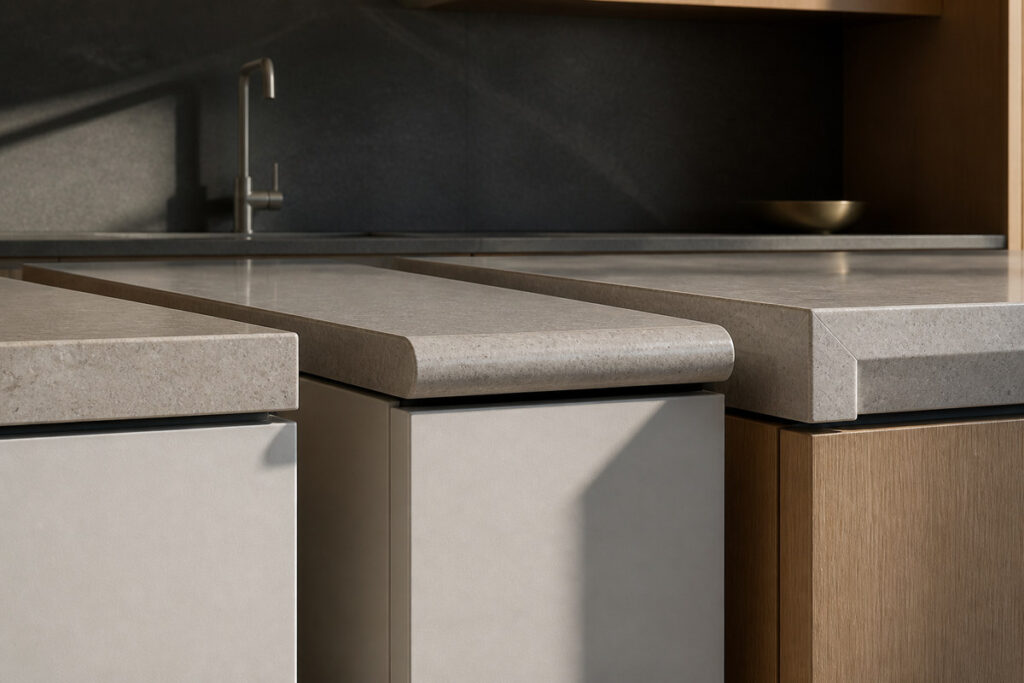
The selected edge depends on slab thickness, corner geometry, cutouts, unsupported overhangs, and the fabricator’s requirements. Put those conditions on the approved drawing with the material, profile, and seams instead of treating an edge sample as a complete specification.
How Should Countertops Pair With Cabinetry?
Countertops can frame the cabinetry or become the dominant surface. Use contrast, pattern, and detail to set a clear visual hierarchy.
Setting Contrast and Visual Weight
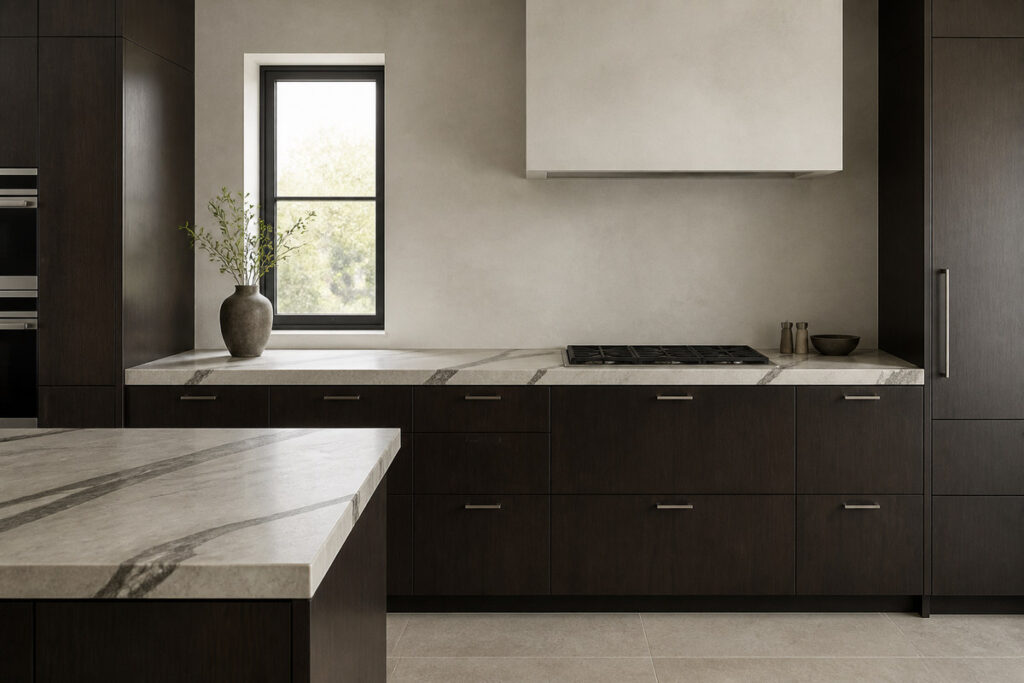
A dark countertop over light cabinets creates a defined horizontal line. A light surface over dark cabinets can make the cabinet volume feel more grounded. Strong veining adds visual weight even on a light background, and the reveal pattern in framed and frameless cabinet construction changes how much linework sits below the counter.
Managing Pattern and Detail
If the countertop has active veining, prominent grain, or high contrast, keep the door detail and backsplash quiet enough for the eye to settle. Review wood tone, hardware finish, backsplash, and kitchen cabinet style together so each element has a role instead of competing in the same view.
What Should Be Confirmed Before Countertop Fabrication?
Begin fabrication only after the material appearance and production requirements have been documented. This reduces the risk of an unintended seam, edge, or pattern layout.
Reviewing the Full Material
When a full slab is available, review it for shade, movement, vein direction, focal area, and seam locations. Otherwise, use the largest approved sample with a layout view. Check the material in the kitchen’s expected daylight, under-cabinet lighting, wall color, and cabinet sheen, then place that review within the broader residential interior design plan.
Documenting Fabrication Requirements
The fabrication record should list the material and finish, edge profile, seam locations, sink and cooktop cutouts, overhangs, backsplash relationship, support conditions, and final site dimensions. Confirm cabinet installation, appliance specifications, and field measurements before cutting. That is the practical value of a material selection and specification review.
FAQs About Kitchen Countertop Types
Can an Island Use a Different Countertop Than the Perimeter?
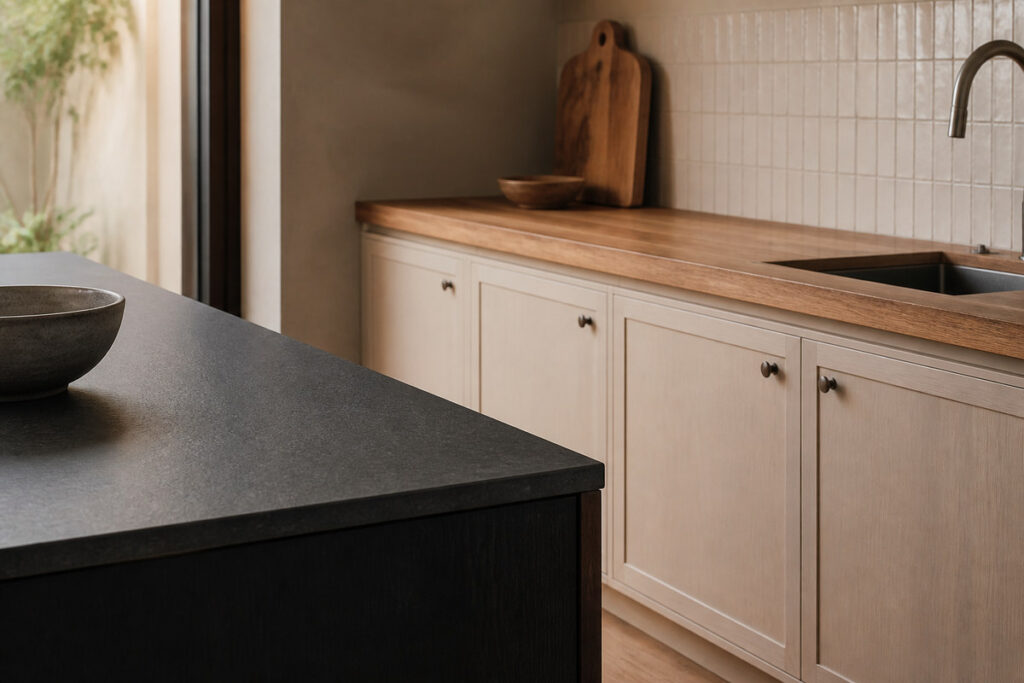
Yes. A different island countertop can add wood warmth or concentrate a more expressive stone. Keep a connection through color temperature, undertone, or edge language, and set that choice within the kitchen’s broader GEORGE INTERIOR design conversation.
Will a Countertop Seam Be Visible?
Often, yes. Visibility depends on the material pattern, finish, lighting, layout, and the point where the countertop changes direction. Review proposed seam locations and the material layout before fabrication rather than assuming that a seam will disappear.
Should the Countertop and Backsplash Use the Same Material?
Either approach can work. Continuing the countertop into the backsplash can make the wall read as one surface. A different backsplash can quiet an expressive counter or add a separate texture. Compare both directions with the cabinet doors and hardware before choosing.
Who Should Confirm an Overhang and Edge Detail?
The countertop fabricator should confirm that the selected edge and overhang can be produced for the specified material and support condition. The design team and cabinet installer should then verify that the approved detail fits the cabinet layout and finished dimensions.