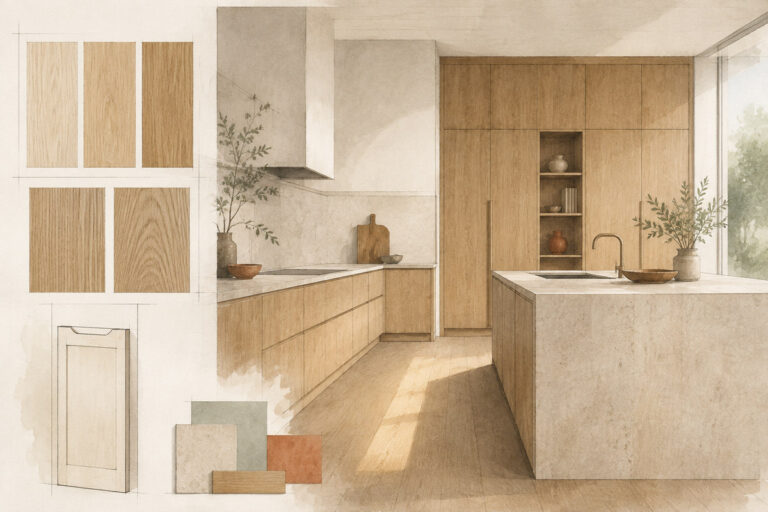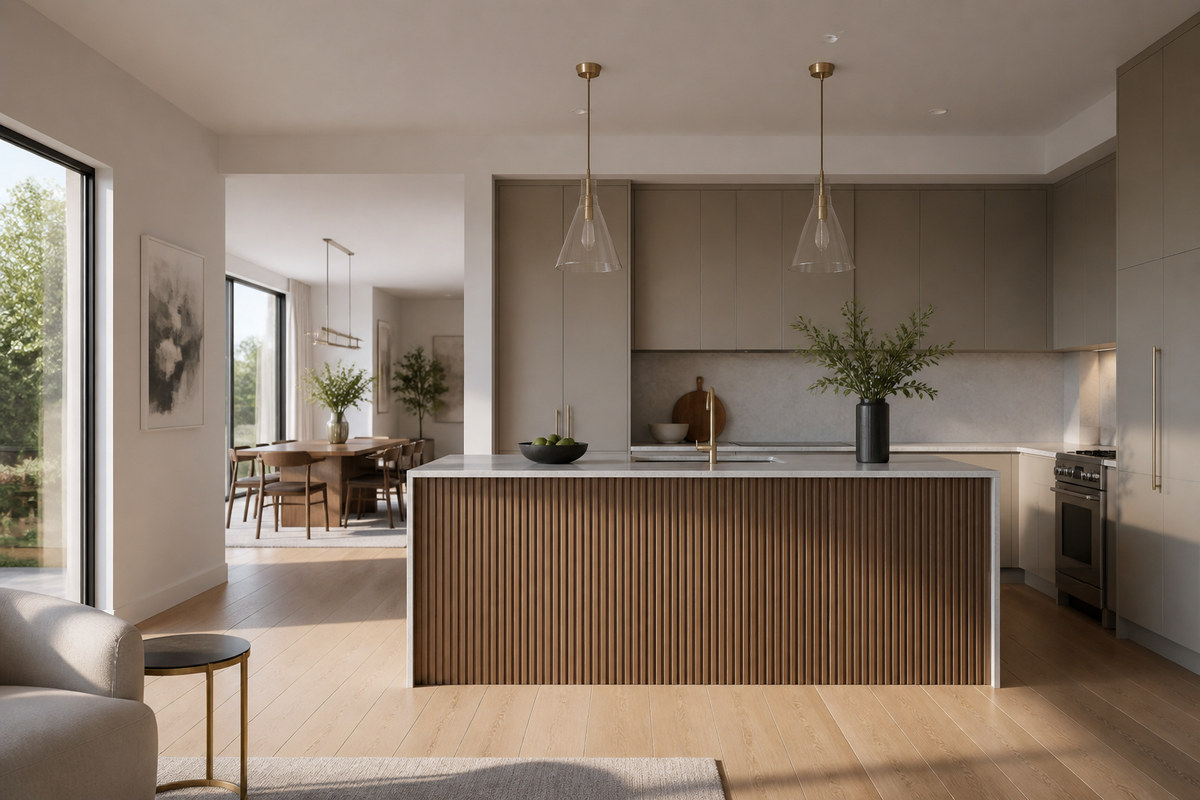
Use fluted kitchen cabinets on one clear focal zone instead of carrying the profile across every cabinet run. The texture then adds depth without competing with the rest of the kitchen.
Choose the feature area first, then simplify the nearby doors, surfaces, and hardware. The right amount depends on what the kitchen reveals from its main entry, seating area, and adjoining rooms.
Where Should You Use Fluted Kitchen Cabinets?
Use fluting where the cabinet face already has a clear visual role. A single treatment makes the texture look intentional instead of making every elevation compete for attention.
Island and Peninsula Faces
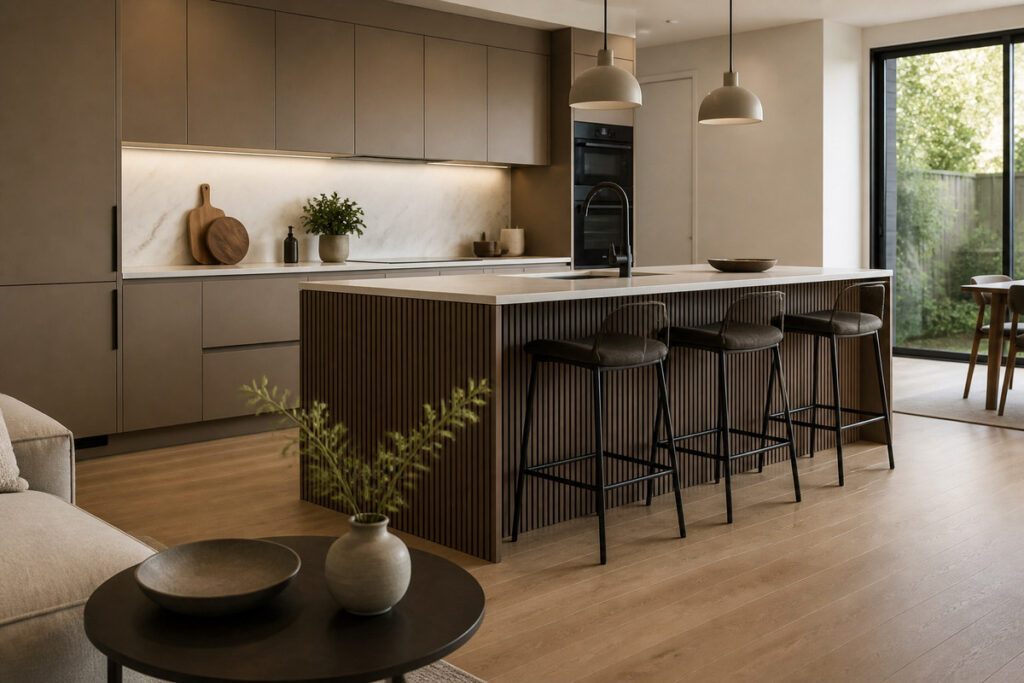
An island or peninsula face can carry fluting well because it reads as one furniture-like plane from the room. Keep the working side quieter when drawers, appliances, or frequent touchpoints already break up the elevation. The feature should still fit the wider kitchen cabinet style rather than act as separate decoration.
One Accent Run
Use one short run for the detail, such as a beverage area or a contained bank of upper cabinets. End the profile at an architectural break so the change in door treatment looks deliberate. In a whole-home scheme, the choice should also support the residential interior design direction beyond the kitchen.
Tall-Cabinet Interruptions
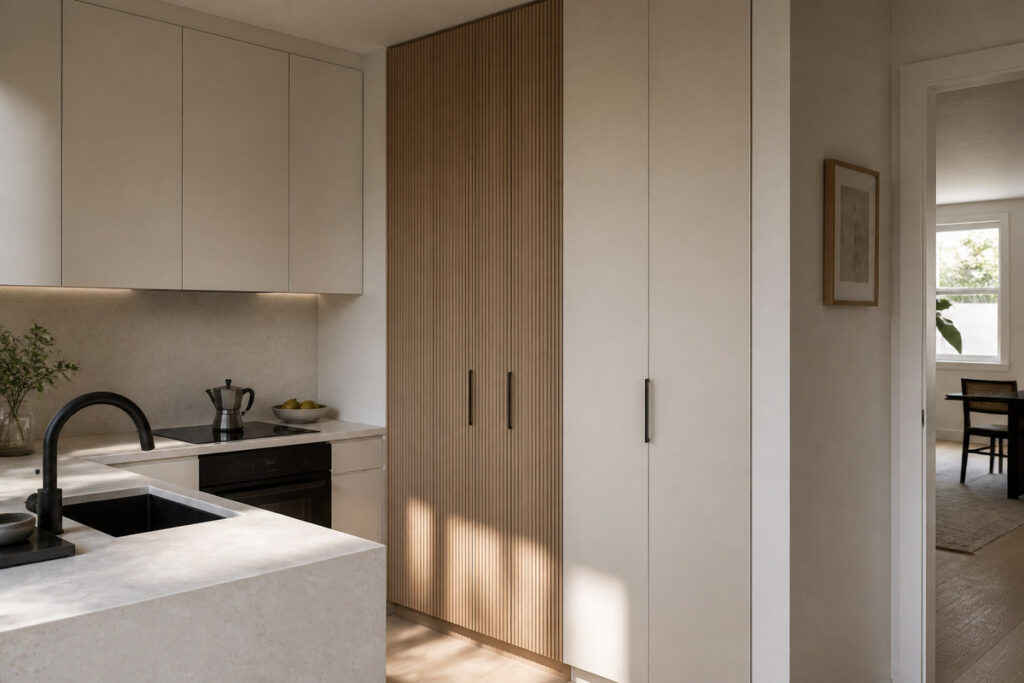
Tall storage has more visual weight than a base run. If one tall face is fluted, keep nearby tall fronts plain and avoid repeating the profile on the island. The composition needs an uninterrupted surface close by. Confirm that the desired profile fits the selected framed or frameless cabinet construction before finalizing the elevation.
What Should Surround Fluted Kitchen Cabinets?
Keep the cabinetry around the fluted zone simpler. Fluting already adds vertical lines, shadow, and texture, so another decorative layer can make the feature harder to read.
Flat Door Profiles
Pair fluted fronts or panels with flat surrounding doors instead of raised panels, heavy moldings, or another routed pattern. The contrast gives the featured area a clear role in the cabinet composition. The selected cabinet materials should also suit the room’s expected heat, moisture, and cleaning conditions.
Calm Surface Pairings
Choose quieter countertops and backsplashes next to the fluted zone. Strong stone movement, busy tile, and a textured cabinet face can pull attention in several directions. Review the cabinet sample beside the actual surface selections before approval. A material selection review can keep those visible choices in the same decision.
Restrained Hardware
Use hardware that supports the cabinet grid without becoming another focal detail. Small pulls, simple knobs, or an integrated opening detail can work when the finish and placement do not compete with the grooves.
How Much Fluting Does Your Kitchen Need?
Use less fluting when the kitchen is compact, highly visible from nearby rooms, or already has several surface patterns. A larger room can carry a broader fluted plane, but it still needs plain cabinetry around it.
Kitchen Size and Sightlines
In a compact kitchen, limit fluting to the first face seen on entry or to one short run. In a larger kitchen, a wider island face may work, provided the perimeter remains visually quieter.
Open-Plan Connections
In an open kitchen, the cabinet treatment is also part of the dining or living-room view. Repeat a related color or material nearby if the rooms need continuity, but do not repeat the fluted profile on every built-in.
Light and Shadow
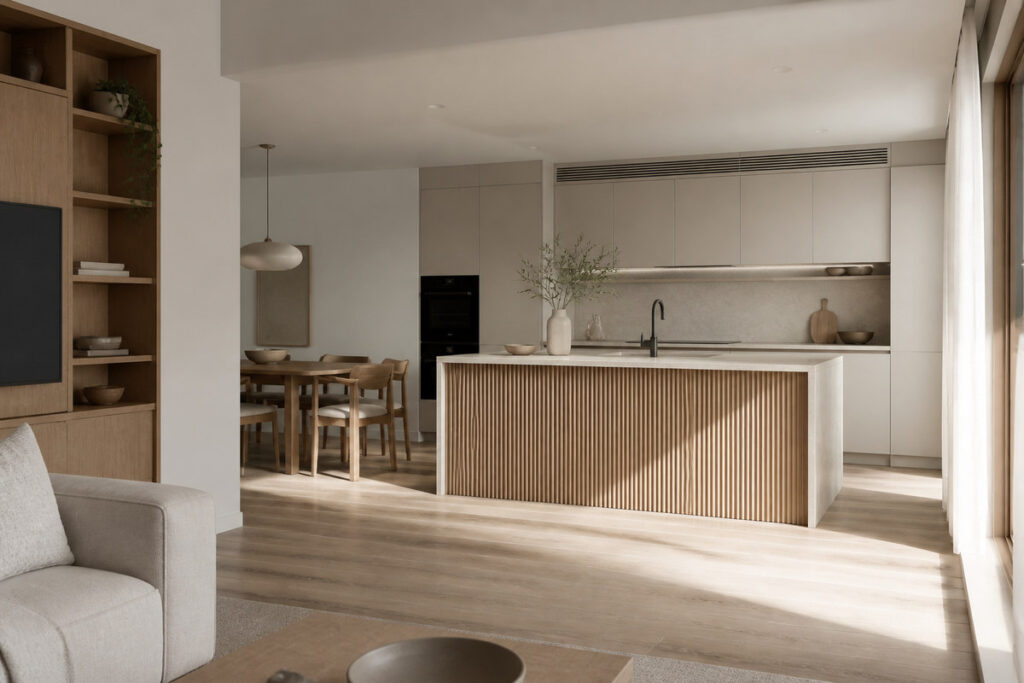
Fluting changes as daylight and fixture light reach the grooves. Check a sample in daytime and evening conditions. A profile that appears subtle in one setting may become much stronger against a bright window or directional lighting.
What Should You Review Before Approving Fluted Cabinetry?
Approve fluted cabinetry only after reviewing the complete cabinet face with its door divisions, adjacent finishes, and intended lighting. A small sample cannot show how the profile will read across an elevation.
Groove Scale and Door Proportion
Choose a groove spacing that suits the width and height of the specific door or panel. A profile that works on a broad island face may look busy on narrow drawers or a small upper door.
Door Splits and End Panels
Review the profile with the door and drawer divisions, not as an isolated texture. The elevation should show where the grooves continue, where they stop, and how exposed end panels fit the same composition.
Sample Review Under Actual Light

Review a full sample with the planned countertop, backsplash, and hardware under the room’s expected lighting. This check can show whether the feature needs a smaller area, a simpler adjacent finish, or a different profile before the cabinet schedule is approved. An interior design studio can use the same sample review to keep the cabinet front connected to the rest of the room.
FAQs
What Are Fluted Kitchen Cabinets?
Fluted kitchen cabinets use repeated vertical recessed grooves across a door or panel face. Suppliers may label a similar raised-rib profile as fluted, so confirm the section drawing and sample instead of relying on the name alone.
Are Fluted Kitchen Cabinets Still in Style?
Fluted kitchen cabinets can feel current when the profile supports the room’s wider design direction. Limit the treatment, choose a proportion that suits the cabinet face, and avoid stacking it with several other decorative patterns.
Are Fluted Kitchen Cabinets Difficult to Clean?
Choose the groove depth and location with routine access in mind. A simpler front may be the better choice for a heavily used area, while a lower-contact feature face gives the profile more room to remain the main visual detail.
Do Fluted Kitchen Cabinets Cost More?
Fluted cabinetry may cost more when the profile changes the door or panel fabrication, finish preparation, or both. Request a line-item comparison with a flat option in the same material, size, and finish before approving the detail.
What Is the Difference Between Fluted and Reeded Cabinet Doors?
In strict profile terms, fluting uses recessed grooves and reeding uses raised ribs. Cabinet suppliers do not always use those labels consistently, so compare the section drawing and finished sample before selecting either profile.