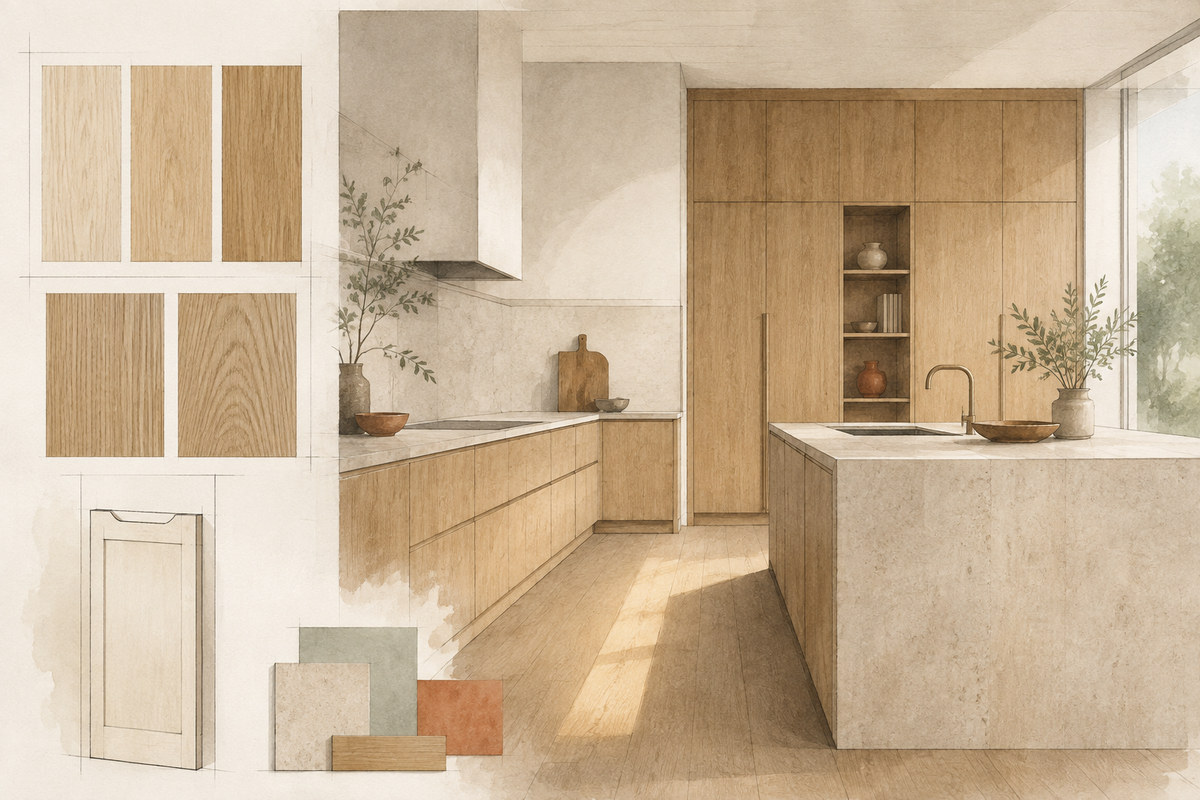
White oak kitchen cabinets work best when the cabinet fronts, fixed surfaces, and room light point to the same temperature and visual weight. Choose the white oak tone, grain character, and door scale together, then review the full palette before approving a finish.
That sequence keeps a pale sample from reading unexpectedly warm, cool, or flat once it sits beside the actual countertop, backsplash, flooring, and paint. This guide covers those visual decisions. It does not set a universal stain recipe or replace the finish and construction specifications for a specific cabinet order.
Read the Room Before Choosing a White Oak Tone
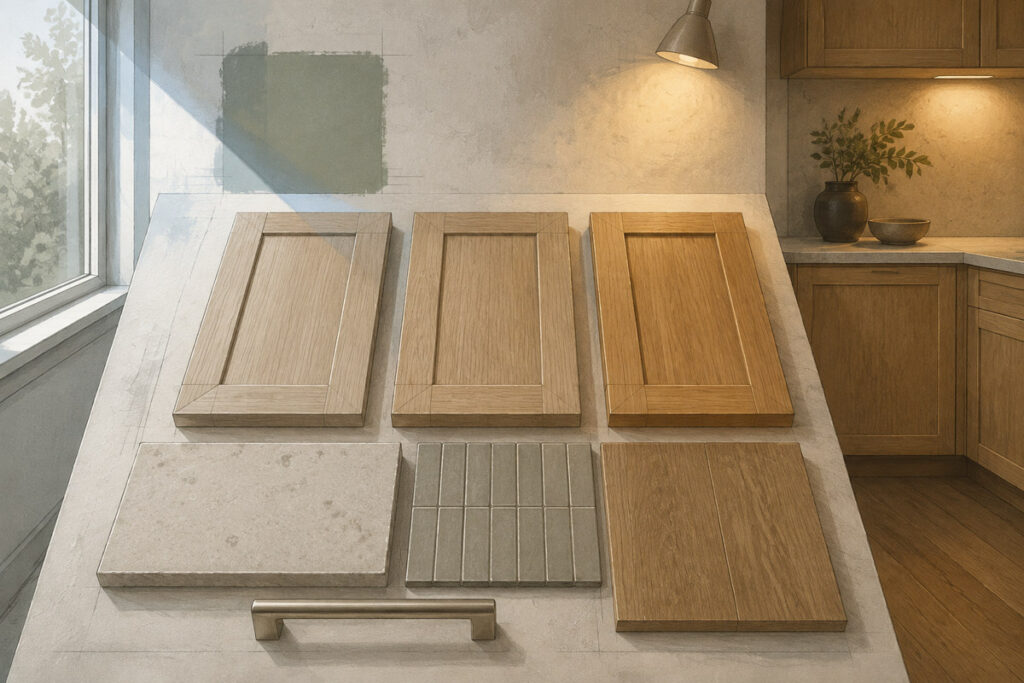
Start with the materials and light that cannot move. A white oak door sample needs to be judged against the actual stone, tile, wall color, flooring, and light that reaches the room. For a whole-home project, place the kitchen inside the wider residential design direction before naming a cabinet finish.
The Fixed Palette
Set the undertone by asking whether the surrounding palette feels cool, warm, or neutral at the scale people will see. A bright white counter and pale gray wall may make a warm oak sample look stronger. Creamy stone, warm metal, or beige flooring may push the same sample toward a softer, more blended result. Choose the sample that gives the cabinet fronts a clear role without making every surface compete for attention.
Do not approve white oak from a paint chip alone when flooring remains undecided. Hold the cabinet decision until the floor sample, or a full-size substitute with the same visual weight, can be reviewed beside the other fixed surfaces.
Light Direction and Time of Day
Review the sample in the room during more than one lighting condition. Daylight, under-cabinet lighting, pendants, and evening ambient light can change how the finish reads. If the kitchen has windows on more than one wall, place the sample where both the perimeter cabinets and the island will be seen before choosing the final tone.
Choose the Grain Character and Door Profile Together
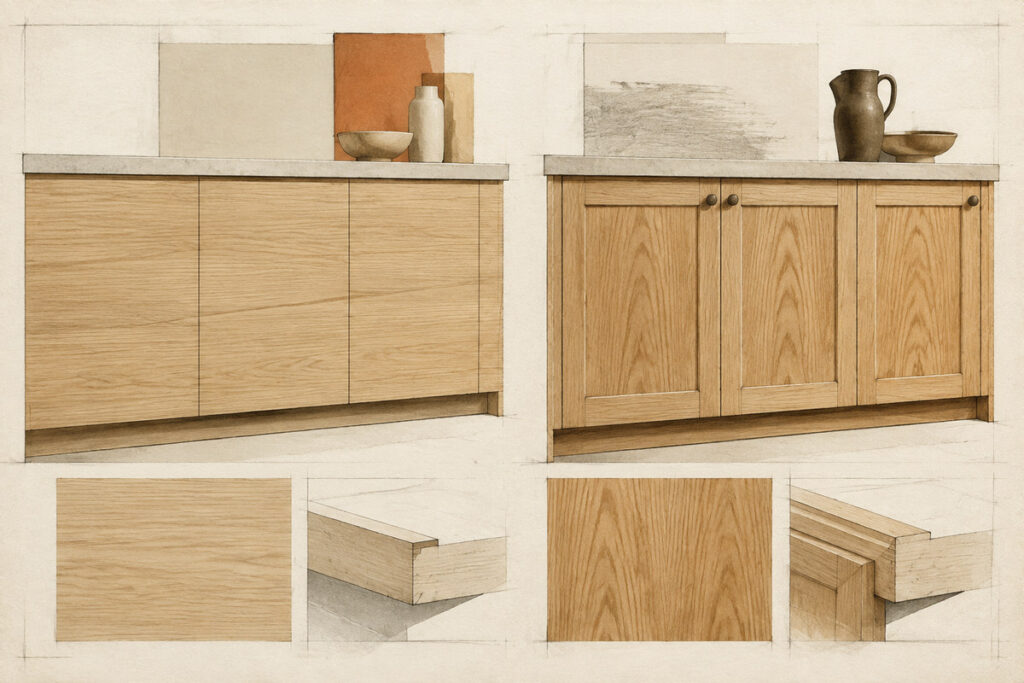
White oak grain should reinforce the door profile instead of competing with it. Decide how much movement the cabinet faces should show before selecting rails, stiles, slab fronts, or decorative detail. The broader kitchen cabinet style should make the wood read as part of one visual system.
Quiet, Linear Faces
Choose a quieter, more linear grain presentation when the kitchen has long cabinet runs, a calm contemporary palette, or a countertop with visible movement. Keep door fronts simple enough that the wood remains readable without turning each opening into a separate focal point. Repeating the grain direction across adjoining fronts can make a large run feel more deliberate.
Active Boards and Visible Variation
Use more visible grain variation when the cabinet fronts are meant to supply warmth and character in a restrained room. Give that variation enough uninterrupted surface to read. Small doors, narrow fillers, busy hardware, and a patterned backsplash can divide the wood into too many competing pieces.
Scale Door and Drawer Fronts to the Cabinet Run
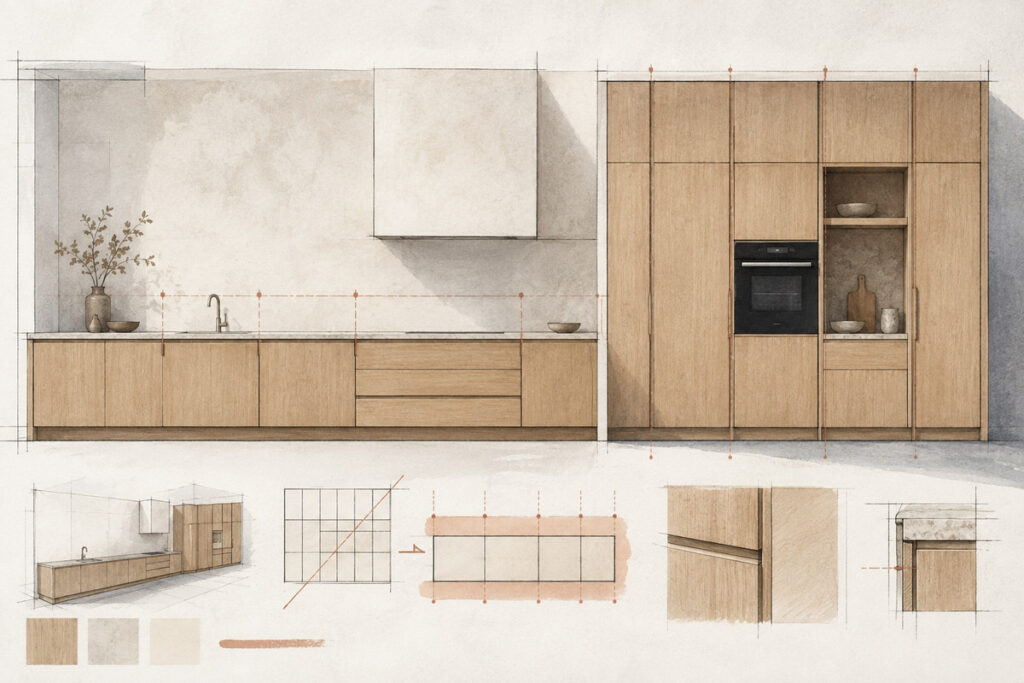
Door and drawer proportions decide whether white oak reads intentional or busy. Establish one scale hierarchy across base cabinets, upper cabinets, and tall units, then keep reveals and hardware positions consistent. Before an order moves forward, define the face material and finish system in the cabinet material specification.
Long, Low Runs
On a long, low cabinet run, fewer broader fronts can make the grain feel calmer and help the countertop keep a continuous visual line. A dense grid of narrow doors and drawer faces can make an expressive wood look more fragmented. If storage needs require smaller openings, keep the hardware simple and repeat the same reveal pattern across the run.
Tall Storage Walls
Tall storage needs a different check because the cabinet faces sit closer to eye level and carry more vertical weight. Break a large wall into readable zones with door scale, open shelving, or a clear appliance surround. Avoid changing the door proportion at every unit unless the layout gives each change a clear functional reason.
Give White Oak One Clear Supporting Role
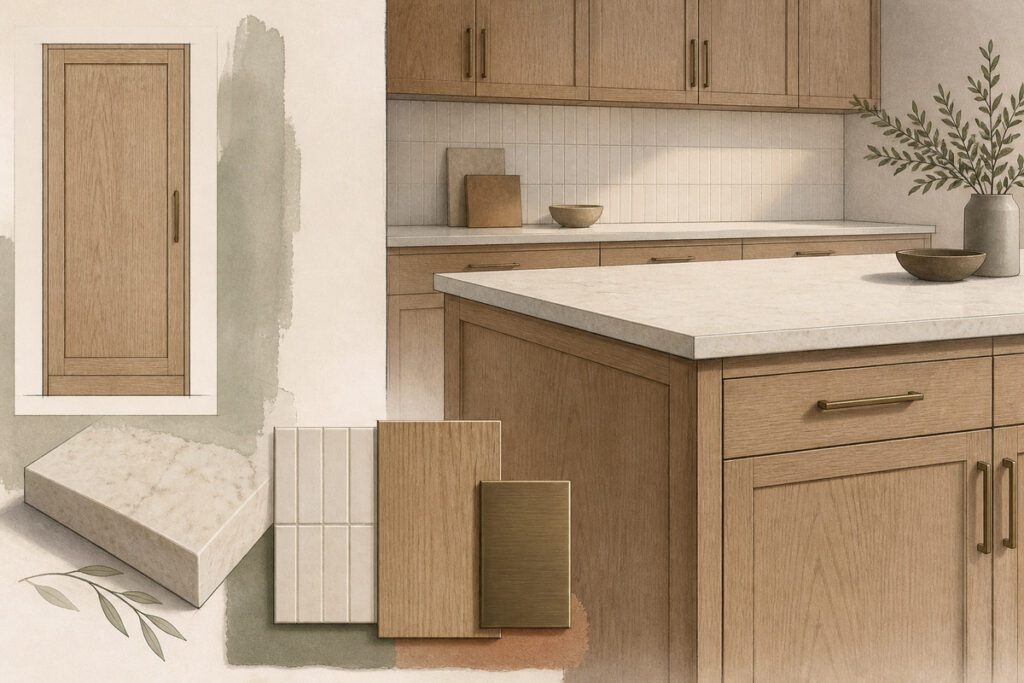
Let the countertop, backsplash, and hardware support white oak instead of competing with it. A single contrast can give the room definition. Several unrelated focal materials can make the cabinet grain look accidental.
| Element | Choose It When | Review With the Cabinets |
|---|---|---|
| Countertop | The cabinet grain is active and needs a quieter field. | Place a full slab sample beside several door fronts. |
| Backsplash | The cabinet faces are simple and the wall needs controlled detail. | Check the pattern, joint lines, and sheen at eye level. |
| Hardware | The room needs a repeated line or a small point of contrast. | Check the pull length and finish against a full door front. |
When the countertop has strong veining or a high-contrast edge, reduce competing movement in the cabinet fronts. A countertop choice should be reviewed as part of the cabinet composition, not as an isolated slab decision.
Approve the Full Kitchen, Not an Isolated Door Sample
Approve the white oak direction from a full kitchen view before the finish is released. A 3D interior design review can show how cabinet scale, adjoining materials, and room sightlines work together before the team commits to a final combination.
- View a bank of cabinet fronts, not one small door, beside the intended countertop and backsplash.
- Check the island and perimeter cabinets from the entry, the main work area, and the adjoining room.
- Record the approved tone, grain direction, door profile, sheen, hardware, and any permitted variation in one finish schedule.
Photograph each test arrangement so the selection can be checked after the team leaves the room. A photo does not replace an in-person review, but it can reveal a finish choice that reads differently from the adjoining space.
For a renovation that reaches beyond the kitchen, use GEORGE INTERIOR to frame the kitchen within the current design-service and project-brief information.
Frequently Asked Questions
Can White Oak Kitchen Cabinets Work With a White Kitchen?
Yes. Keep the white surfaces quiet enough for the wood grain to read, then review the cabinet, counter, and backsplash together so the room does not split into unrelated color blocks.
Should White Oak Cabinets Match the Floor?
No. The cabinets and floor need a deliberate relationship, not an exact match. Keep one surface quieter, or separate the tones enough that the difference looks chosen rather than accidental.
Can a White Oak Island Differ From the Perimeter Cabinets?
Yes, if the island has a different job in the room. A contrasting island can anchor an open kitchen, but repeat one connecting element, such as the countertop, hardware finish, or door proportion, so the two areas still belong together.
When Is Walnut a Better Choice Than White Oak?
Choose walnut when the intended room needs a darker wood field or stronger contrast with pale surrounding materials. Choose white oak when the design needs a lighter wood presence with enough grain to give the cabinetry visible character.